NETGEAR is aware of a growing number of phone and online scams. To learn how to stay safe click here.
Forum Discussion

Dustin_V
Oct 26, 2018NETGEAR Employee Retired
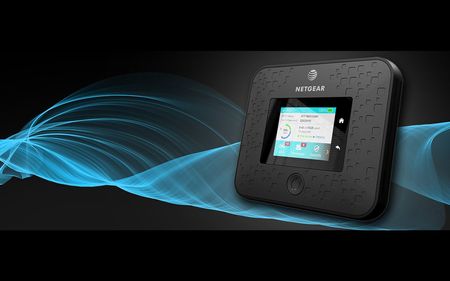
Nighthawk 5G Mobile Hotspot – World’s First Standards-Based Millimeter Wave Mobile 5G Device
The World’s First Millimeter Wave 5G Connection is here, thanks to AT&T! We’ve partnered up to deliver the Nighthawk 5G Mobile Hotspot, the first standards-based mobile 5G network device in th...

schumaku
Nov 23, 2018Guru - Experienced User
nhantenna wrote:
...The “uncarrier” says the tests prove that low-band airwaves will provide 5G coverage across hundreds of square miles from a single tower, which stands in contrast to millimeter wave sites that cover less than a square mile.
Reads to me much more like a marketing message "We have the better bands available than the competition investing in the millimeter wave bands.". Of course, the millimeter wave cells are for very small cell deployment, under the road/sidewalks, in closed areas like train or subway stations.
nhantenna
Nov 23, 2018Apprentice
Regarding the "Nighthawk 5G Mobile Hotspot" itself, now that the data signal is all over the place from the low MHz to the high GHz, and given that Netgear will not provide any manual band control, I wonder which external antenna solutions will be supported. For example if you live in a millimeter wave area but an obstruction interferes with the signal you'll need an external antenna placed outside of a window or on the roof. Are AT&T's 5G frequencies published anywhere?
- nhantennaNov 25, 2018Apprentice
Are AT&T's 5G frequencies published anywhere?
The "Nighthawk 5G Mobile Hotspot" will be available for sale next month and its technical specs will state all the bands it supports. Every component of your external antenna solution (cables, cable length, connectors, ground blocks, adapters, amplifier, the antenna itself) must support the frequencies that are important to you. 4G LTE external antenna solutions are widely available. 5G external antenna solutions will get there eventually but may be very limited in 2019.
- nhantennaNov 25, 2018Apprentice
AT&T and Verizon are initially deploying 5G in millimeter wave spectrum bands above 24 GHz. The reason those carriers have focused on that band is that the band includes broad swaths of spectrum that can support higher speeds in comparison with lower-frequency spectrum. AT&T, for example, has said that it has achieved mobile speeds of 1 Gbps using millimeter wave spectrum.
That's not two point four GHz...that's twenty four GHz. Your typical external 4G LTE cables, connectors, antenna, etc are not going to work with spectrum that high. Chicken and the egg. If external 5G antenna solutions do not exist yet, will Netgear put 5G enabled antenna ports on the hotspot? 4G LTE only antenna ports on the hotspot?
- nhantennaDec 04, 2018Apprentice
That device has turned out to be Netgear's Nighthawk 5G Mobile Hotspot, which played a role in some of AT&T's demos here in Maui. This new hotspot has all the bands you'll find on Netgear's LTE hotspot, with 5G built on top of it. The hotspot is capable of 5 Gbps where there's wireless spectrum that supports those eye-popping speeds. The hotspot also has dual-band Wi-Fi.
AT&T is also offering 5G service with a rollout in 12 US cities this year, and plans to add service in seven other cities in early 2019. Initially, 5G will be available for AT&T customers using the Netgear Nighthawk 5G Mobile Hotspot; it's the first standards-based mobile 5G device in the world that can access a live millimeter wave 5G network, according to AT&T. The Samsung phone will be AT&T's second 5G device, after the aforementioned Netgear Nighthawk mobile hotspot puck.
While the trials that both AT&T and Verizon have done so far only net speeds around 1Gbps to 2Gbps, 5G is supposed to offer up to 5Gbps speeds.
To offer the fastest speeds with the lowest latency, AT&T will initially deploy its 5G network on a millimeter wave spectrum (mmWave). While mmWave can offer the fastest 5G service, it isn’t the most reliable.
High-band spectrum like mmWave doesn’t cover a large area and has relatively poor penetration. Over the next several years, AT&T will build out its 5G network around the country with small cells, and deploy service on more hearty spectrum bands. Until the rollout is complete, the service will piggyback off its robust LTE network.
Although AT&T will have 5G service in cities around the country by early 2019, it’s worth noting the service will likely be spotty. Expect to see the initial rollout in heavily trafficked areas like city centers, airports, and stadiums at first.
- JSchnee21Dec 05, 2018Virtuoso
Given that mmWave and LAA frequencies will only cover at most a mile from the mast (exluding non-mobile applications with dedicated directional antenna), only the densest urban cores, stadiums, airports, convention centers, DAS installs, etc. are ever likely to see these frequencies and bandwidths. Hence the emphasis on LTE-A with 3 & 4 CA, 4x4 MIMO, and 256QAM. For the vast majority of the masses, LTE will continue to be the principle cellular data technology for the next 5 years.
The one exception will likely be Tmo and possibly Sprint. Tmo has vast swaths of 600Mhz which could potentially be used for 5G. Though given only 20Mhz of spectrum you won't get very high speeds. But if Tmo can finally pull off their merger with Sprint, together, they may have enough bandwidth.
The Netgear blurb say "dual band" Wifi. I wonder what they mean by that. The current Nighthawk M1100 already has dual band Wifi (2.4&5.8). But this pointless. You cannot use 5.8Ghz if you want LAA. And you cannot use 2.4GHz if you want speeds >54Mbit.
What the new Nighthawk needs is tri-band Wifi, or 2x 5.8Ghz radios. One to receive LAA and one to talk to Wifi clients. Or else, I'll continue to have to hook up a proper Wifi AP's to the MR1100's ethernet port.
- nhantennaDec 05, 2018Apprentice
Hence the emphasis on LTE-A with 3 & 4 CA, 4x4 MIMO, and 256QAM.
1) For most people, LTE means phones. maybe a few laptops, tablets....but it's mostly phones. forget about 5G and next gen stuff, what percentage of phones support 4 CA, 4x4 MIMO, 256 QAM, etc? Unless you get these phones in peoples hands it doesn't really change most peoples experiences. Developers and their solutions target mass market. If most cell phones refuse to put LTE-A parts inside for many reasons like cost, battery, etc, why would they put 5G parts inside? That said 5G has to be faster, better, cheaper than LTE-A if it ever wants to be mainstream.
2) Cell service plan throttling and data caps. I'm not seeing cell providers removing or loosening their throttling or data caps for LTE-A let alone 5G. Letting 5G customers go wild with 5G speeds for 30 seconds before they are throttled to 4G speeds is very restrictive. Short term the only way is to charge a significant premium for 5G cell service. 5G speeds that have everyone excited take significantly more spectrum (think 100's of MHz, not 10's like 4G) This is why 5G is in the upper GHz blocks. Which ties back into #1 above. If you only have a few takers for 5G phones and more expensive 5G service, developers will continue to focus on the majority of customers on 4G.
3) Millimeter wave might as well be "yet another" LTE-A bolt-on. Deployment is crazy expensive and thus will be very limited. Existing cell towers are pretty ugly. Cities, towns, suburbs will reject carrier permits trying to erect significantly higher density towers that are feet between them. It is safe to say the ultra dense ugly cell tower approach is out. In downtown areas millimeter wave equipment can be added to rooftops, sides of buildings, existing infrastructure without looking so awful. If the area where you live would require new cell towers to make millimeter wave reach you, I do not see that happening. I don't think anyone wants to see this grid of ugly towers in their backyard.
- nhantennaDec 07, 2018Apprentice
So what kind of speeds can we actually expect from Motorola’s 5G mod? The company did some level-setting there, too. Though it’s theoretically capable of 5Gbps speeds, there are so many factors that Motorola’s now advertising a conservative estimate of 300 to 500Mbps. That’s plenty fast, but it’s less than one-tenth of those full theoretical speeds. “We feel that’s something that can be achieved,” says Michau of what “the average user” might see.
The 5G hype machine is all over the place. Sounds like "real world" Gbps is not happening (at least for first gen 5G). Even if you were to make a 5G connection at 500Mbps what would the "average user" do with it? Tweet at 500Mbps? Text message at 500Mbps? Youtube at 500Mbps? Unless the content providers (cnn.com, weather.com, etc) open 500Mbps pipes for each user it's not going to matter. Additionally, "average users" world-wide have low to mid range phones that can not handle 500Mbps data streams (for example disk reads/writes at 500Mbps).
You have to have a 500Mbps capable phone (cpu, memory, disk, network interface, etc) + a 500Mbps cellular carrier connection + one or more content providers that can saturate a 500Mbps connection. This is a small group of people (today) when we're talking about the world-wide population. It's hard for carriers and content providers to justify such a costly build out for this small group of people.
5G at 500Mbps makes more sense to replace a home internet connection that is routinely shared with multiple users, laptops, cell phones, playstations, netflix streaming televisions, etc.
- JSchnee21Dec 07, 2018Virtuoso
What I find interesting/comical is that no one is talking about how the backhaul is going to keep up with 5G speeds. In many (perhaps most?) locations backhaul cannot keep pace with LTE speeds (let alone LTE-A).
If one single airlink can potentially use anything even remotely close to 1Gbit. What are they going to heave to feed each sector with? 40Gbit, 100Gbit? The fiber costs alone will price them out of business.
But, you are absolutely correct re: content providers. Netflix 4K streaming is only ~15Mbit/sec. What would one possibly do with a gigabit of bandwidth on a mobile device? Now lower latency, better network efficiency, better network capacity, fewer dropped frames, these are all things which would be useful.
No telemedicine or teleprescence or virtual / augmented reality applications will use cellular in the United States. All of these business have a hardline.
- nhantennaDec 11, 2018Apprentice
AT&T has promised to launch 5G in “parts” of 12 cities this year. That seemingly minor detail actually speaks volumes about both the benefits and drawbacks of 5G.
5G was initially designed as a way to use millimeter-wave spectrum—this spectrum generally sits above 20 GHz and can transmit vast amounts of data. The drawback though is that it doesn’t transmit signals very far; Verizon, for example, noted that its 5G Home service on 28 GHz spectrum can reach roughly 3,000 feet.
Therefore, as AT&T deploys its own mobile 5G service in its 39 GHz spectrum, it will face significant challenges in getting it to reach across neighborhoods and cities simply due to the face that the signals don’t go very far. AT&T and the rest of the nation’s carriers are working to deploy small cells and other network infrastructure to counter this situation, but it’s slow going.
The most likely scenario here is that AT&T won’t provide specific coverage details in its initial 5G launch this year as it works to expand coverage throughout the coming years.
That last sentence LOL....be extremely wary of a 39GHz wireless service that refuses to tell customers the 39GHz wireless service coverage area. It's a bad way to launch new technology that leaves a bad initial impression and a bad taste in everyones mouth. In my eyes, this 39GHz service is just another 4G LTE bolt-on like LAA, CA, etc. Each independent bolt-on may or may not be supported in your area. Each independent bolt-on may be on one cell tower and then NOT on the next 75 cell towers as you drive down the road. If you can't count on the service, developers will not make apps to support it, phone manufacturers will not take the financial hit to add the parts, etc.
Instead of 5G, the "average user" would be better off with an additional 10Mbps in speed. If the "average user" speed in Texas was 25Mbps, AT&T should get it to 35Mbps. For everyone. That is progress. That is raising the bar. Promising 1 to 2 Gbps to customers with initial 5G but never actually delivering it to any significant population is not progress. It is only a marketing scheme.
- nhantennaDec 18, 2018Apprentice
1) AT&T announced their 5G+ service goes live December 21, 2018.
2) "5G+ is built to provide a mobile 5G experience over mmWave spectrum" If you do not live on a mmWave enabled street this solution is not for you.
3) "Next spring, customers will be able to get the Nighthawk for $499 upfront" AT&T is still "testing" with private groups....the Nighthawk is NOT generally available for sale yet. AT&T is not even ready to announce a date when the Nighthawk will be available for sale other than to say sometime "next spring".
4) "15GB of data for $70 a month" If you have a requirement for 5G+ speeds, this plan makes no sense. At 5G+ speeds 15GB will be consumed in one day or less.
5) AT&T has NO comment on 5G+ speeds customers can expect. Is it 50Mbit? 500Mbit? 1Gbit? AT&T is not ready to comment on that.
Bottomline: AT&T wants a big premium for 5G hardware paired with less data than customers have now. AT&T is not ready to talk about 5G+ speeds which is the only reason businesses and customers would sign up for it in the first place. The Nighthawk is not available for sale until "next spring" which is an interesting way of saying that the actual 5G+ launch just slipped by several months.
- TeeJay74Dec 18, 2018Virtuoso
Realistic viewpoints here. General public, please do not expect too much from 5G technology in 2019. Many experts consider 2020 will be a big year for 5G and I agree that too.
- JSchnee21Dec 18, 2018Virtuoso
$499? Are they serious? How about an MR1100 Gen3 that actually does LTE-A with 3x and 4x CA, 4x4 MIMO, and 256 QAM? Like one that is as fast as a Samsung Galaxy S9 or an iPhone XS/Max with a big battery, ethernet, and dual 5GHz radios ?!?!
Do you recall the saying, "B.S., M.S., PhD.?"
It goes something like, "Bull Soup, More Soup, Piled Higher and Deeper." of course you cannot pile soup.
- nhantennaDec 20, 2018Apprentice
AT&T and T-Mobile will both hit rural areas with 5G starting in late 2019. The key is low-band, frequency-divided (FDD) spectrum, which current 5G chipsets don't support. But that will be sorted out later this year. On that spectrum, you should expect about a 35 percent increase in speeds and capacity from 4G, but a major drop in latency. Those networks may not have the capacity for home internet, but they'll change rural life in different ways.
Hopefully the "spring 2019" nighthawk will support "low-band" 5G. With the high cost of the nighthawk customers can not afford to buy a "mmWave only" version in 2019 before it immediately goes obsolete, then rebuy a 2020 version with mmWave + "low-band". As we have already discovered with nighthawk 4G LTE, slipping in new bands to subsequent nighthawk revisions is awful for customers.
Up to 35 percent speed increase over typical LTE speeds may be hard for people to notice it. But at least it is more believeable from a cell tower backhaul perspective. A "bit faster" than 4G LTE is a far cry from the 5G hype machine with Gbit+ data pipes for everyone.
- nhantennaDec 21, 2018Apprentice
AT&T confirmed that it will soon begin changing the “LTE” indicator on some of its current Android phones to “5G E” in markets where the company now offers 4x4 MIMO, 256 QAM and other advanced LTE network technologies. AT&T’s “5G E” label will sit next to its “5G+” label, which the operator has applied to its mobile 5G service launching today in 12 cities. AT&T’s “5G+” label applies to transmissions in the operator’s millimeter-wave spectrum. (AT&T’s initial mobile 5G launch will transmit signals in its 39 GHz licensed spectrum band across 100 MHz of spectrum and 2x2 MIMO antennas.)
- JSchnee21Dec 21, 2018Virtuoso
Great, as if faux(4)-G wasn't bad enough. Now we'll have fake 5G, too. Initially, I thought the 5GE moniker was going to be for sub-6GHz 5G service to distinguish it from mmWave which was 5G+ But I guess they couldn't help themselves.
5G for ALL! Hell, if I already have "5G" why should I upgrade?
I have to admit, the LTE-A I've been getting in the Philly suburbs has been very nice on my iPhone XS Max -- 100-160Mbit easy, sometimes as high as 240Mbit. Of course upload data rates are still very poor. And my iPhone runs laps around my MR1100.
Funny thing is, in NJ where I live, very, very few towers have been upgraded. Speeds are much slower typically only ~15-50Mbit. You'll see the occasionaly tower that does ~100Mbit, but they are few and far between. Even when driving in heavily trafficed areas like the NJTPK.
Happy holidays everyone. Now cough up $499 and pay $70/mo for 15GB.
So what happens when I put my unlimited plus plan SIM in a new M5 Nighthawk? Will I get unlimited 5 GeeWiz? Good thing I signed up for two of them before AT&T stopped offering them.
- nhantennaDec 21, 2018Apprentice
So what happens when I put my unlimited plus plan SIM in a new M5 Nighthawk?
My guess is it will work, but only for speeds your plan is qualified for (ie LTE/5G Evolution). Netgear is not going to stock older hotspots forever. As customers break or lose their older hotspots they will need replacements. mmWave and "low-band" 5G are just additional bands Netgear is adding to their hotspot offering. All the normal LTE bands will be there. As for the number of internal/external antennas we'll have to wait and see when the 5G+ nighthawk actually ships spring 2019.
- nhantennaDec 21, 2018Apprentice
I have to admit, the LTE-A I've been getting in the Philly suburbs has been very nice on my iPhone XS Max -- 100-160Mbit easy, sometimes as high as 240Mbit. Of course upload data rates are still very poor. And my iPhone runs laps around my MR1100.
If both the iphone and MR1100 are running on AT&T, a youtube with the devices running side-by-side would be very helpful. If you can demonstrate the MR1100 LTE-A is not working, existing MR1100 customers can pursue a replacement or upgrade to the 5G+ model with AT&T.
A benefit of netgear displaying the "5G E" indicator is to give customers insight to whether the tower they are connected to is LTE or "5G E". If netgear is not detecting "5G E" enabled towers correctly then the LTE-A features/functions will not be used.
- nhantennaDec 21, 2018Apprentice
https://about.att.com/newsroom/2018/5g_evolution_market_update.html
this web page states: “As a reminder, 5G Evolution markets are locations where we’ve deployed technologies that enable peak theoretical wireless speeds for capable devices of at least 400 megabits per second. And, we plan to offer 5G Evolution in over 400 markets by the end of the year. In the first half of 2019 we plan to offer nationwide coverage, making 5G Evolution available to over 200 million people.”
"5G E" is way ahead of "5G+" in terms of rollout ("5G E" cell towers and "5G E" devices). During 2017 and 2018 my "5G E" nighthawk with a single 700MHz external antenna has:
1) *rare* peak 50Mbit download
2) *most of the time* 20's to 30's Mbit download
3) *most of the time* 6 to 17 Mbit upload
I consider these speeds to be normal "LTE" scores. I do not believe "5G E" is on my cell tower yet but there is no way to determine that by looking at the Nighthawk.
- nhantennaDec 21, 2018Apprentice
https://about.att.com/newsroom/2018/5g_evolution_market_update.html
The other technology we’re using to lay the mobile 5G foundation is LTE-LAA. With LTE-LAA, the network technologies have a peak theoretical wireless speed for capable devices of 1 gigabit per second. LTE-LAA is now live in parts of 20 cities with plans to reach at least 24 cities this year.
Even AT&T has a hard time describing "5G Evolution". AT&T states "5G Evolution" gets you "theoritical" 400Mbps, while LAA gets you an additional "theoritical" 600Mbps for a grand total of a "theoritical" 1000Mbps. In other words more than half of AT&T's hype machine 1Gbit speed is LAA. AT&T comes right out and says LAA is only "in parts of 20 cities". "In parts of" likely means certain streets or blocks just like 5G+. The way AT&T describes it here it sounds like LAA is NOT part of the "5G Evolution" set of technologies. Forget the names they call it, it sounds like the 400Mbps part will be nationwide by next summer which is pretty awesome. And since AT&T does not say what LAA is going to do in 2019, there is probably not much to talk about. "Theoritical" 400Mbps, let's assume half that speed in the real world with trees, buildings, weather, etc, giving us 200Mbps nationwide. 5G+ will not work for me anytime soon in my rural location, so I'm looking forward to 200Mbps on the "5G E" nighthawk.
- nhantennaDec 21, 2018Apprentice
"the LTE-A I've been getting in the Philly suburbs has been very nice on my iPhone XS Max -- 100-160Mbit easy, sometimes as high as 240Mbit."
This result jives with the 400Mbit "5G E" (without LLA) service estimate of 200Mbit peak score in the real world. 200-240 Mbit range I would say that iPhone is getting the correct and expected score that AT&T intended to deliver.
The question is what does the nighthawk 5G E get at the same location and time? My peak score on my 5G E Nighthawk is 50Mbit after running hundreds of tests over the last 12 months. There is no way I am reaching your "100-160Mbit easy" scores. It does not matter if I use WiFi or wired Gigabit ethernet, I can not get above 50Mbit. My guess is "5G E" is NOT turned on in my rural location yet.
- schumakuJan 18, 2019Guru - Experienced User
nhantenna wrote:
The question is what does the nighthawk 5G E get at the same location and time? My peak score on my 5G E Nighthawk is 50Mbit after running hundreds of tests over the last 12 months. There is no way I am reaching your "100-160Mbit easy" scores.
The Netgear 5G router announced end of October 2018, in the market since about mid December 2018 - unless you are an Alpha or Beta tester (and then you would be under an NDA) this is a blunt lie.
- JSchnee21Jan 18, 2019Virtuoso
Note that he said, "Nighthawk 5G E". Remember, that's AT&T's fake 5G. Also know as LTE-A to the rest of the world. I expect he is referring to his MR1100.
I'm not sure what an AT&T RAN is. Is this like a tier 3 or 4 network support engineer? It's hard enough to get to Tier 2.
My iPhone XS Max, when given a strong RF signal on an upgraded and lightly loaded tower routinely gets 150-220Mbit DL. In contract on the MR1100 on the same tower(s) I max out at ~90-110Mbit. I have verified that CA appears to be working on the MR1100. I routinely see at least two secondary carriers when benchmarking or streaking.
I suspect there is something amiss with QAM, MIMO, provisioning or both. But, I also cannot rule out poor 5GHz 802.11ac wireless. I haven't had time to try and benchmark the MR1100 on these towers using USB tethering.
But I have tried both 40MHz and 80MHz 802.11ac. Which give PHYS links of ~400Mbit and 866Mbit respectively to my iPhone as both devices are 2x2. 2.4GHz is off. I actually find the 40Mhz works a bit better as it has slightly better range and less interference.
A 400Mbit PHYS link should support ~40-60% of link rate in terms of real throughput. So I should have at least 200Mbit of real headroom -- but only see ~60-90Mbit routinely. 110Mbit was the fastest I've ever seen. I've seen one other post in which one person got 147Mbit DL on their MR1100, once.
Like I said, I see 150+ Mbit on my XSM every day. There are at least 10 towers I pass during my commute to work which give these speeds. That said, there are still many, many towers that max out at 30-50Mbit.
I do wish upload speeds were better. Both the MR1100 and XSM are terrible (5-15Mbit). Funny, my ZTE/AT&T Velocity 2 has great upload speeds (20-40Mbit) and it's download speeds are just shy of the MR1100.
- nhantennaJan 18, 2019Apprentice
"I'm not sure what an AT&T RAN is."
Radio Access Network Engineer. Someone who can see exactly what is happening on the AT&T side. You will likely have to provide your SIM card type info on the Nighthawk and iPhone. Run the speedtests through both devices. AT&T RAN will visually be able to see your connection details to explain what is happening. If you are connected to AT&T's network the RAN can see everything about that connection.
I have the 5GE Nighthawk (5G Evolution). I do NOT have a 5G+ Nighthawk (mmWave).
- JSchnee21Jan 25, 2019Virtuoso
Sorry, I don't have a screen shot on me. But if you follow these steps:
1) Connect MR1100 to PC via USB
2) Telnet to 192.168.1.1 5510 (note telnet to the IP of your MR1100, at port 5510)
3) Run this command in the Telnet session AT!GSTATUS?
4) Observer which bands you are connected to.
5) Initiate a speedtest on your laptop (I like Fast.net or the SpeedTest App (not url) from the Window 10 App store)
6) Run this command in the Telnet session AT!GSTATUS? again. You'll see there are now additional bands lists to support the active data session from the speed test. Assuming CA is available in your area.
